
How Lithium-Ion Battery Chemistry Improves Forklift Performance and Longevity
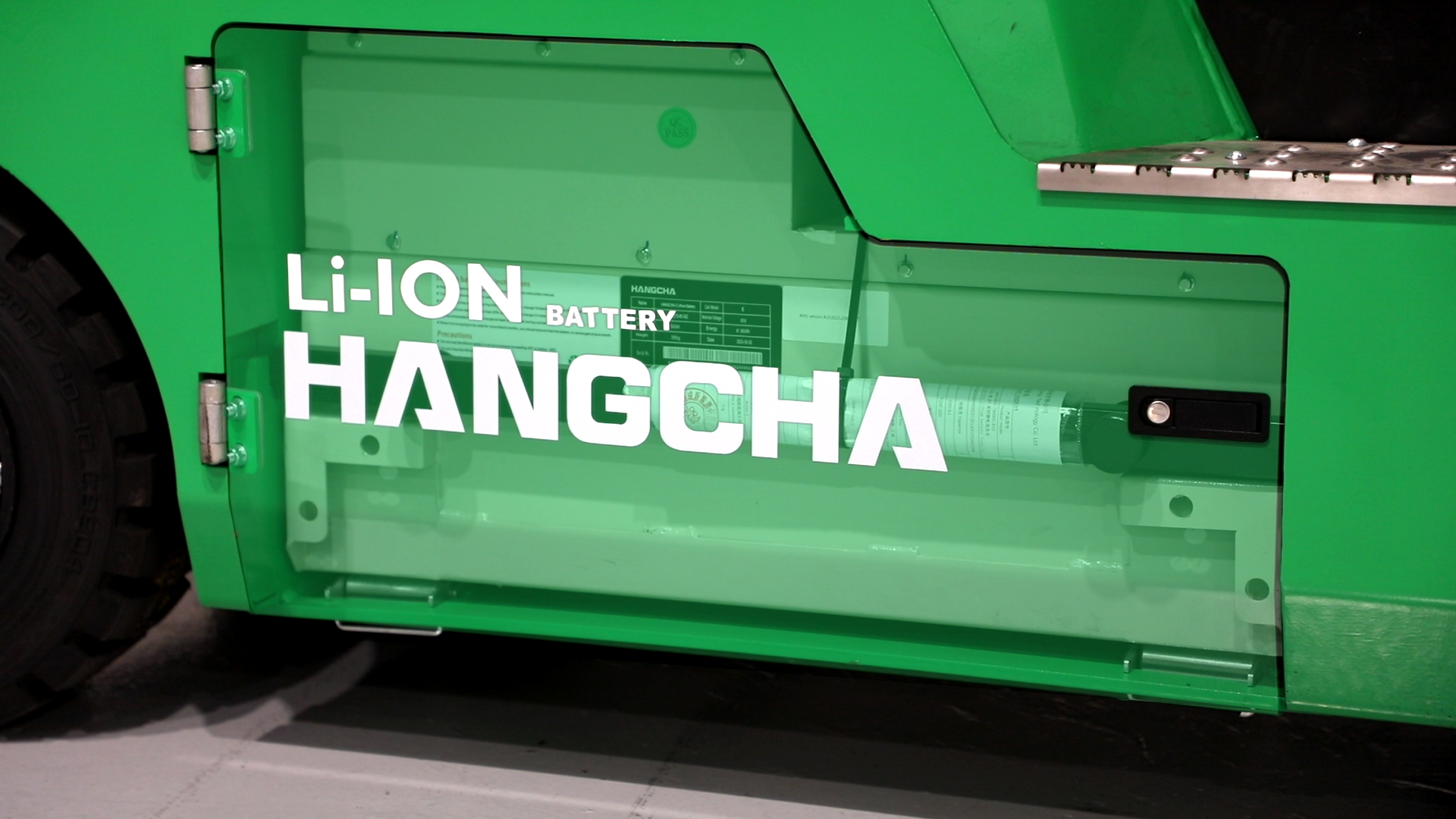 The adoption of lithium-ion forklifts continues to grow across the material handling industry. While faster charging and reduced maintenance are often highlighted, the true advantage begins at a deeper level, battery chemistry.
At Hangcha, lithium-ion technology is treated as a core engineering element, not a bolt-on upgrade. This design approach influences how the entire truck is designed and performs.
What Makes Lithium-Ion Battery Chemistry Different
The Lithium Iron Phosphate (LiFePO₄) chemistry is a breakthrough in efficiency, safety, and performance.
Lithium-ion batteries store and release energy through the movement of lithium ions between the cathode and anode. This highly stable chemical process allows for efficient energy transfer and reduced internal degradation over time.
Hangcha engineers leverage this chemistry’s stability to create battery systems that optimize output, while keeping the design of the forklift balanced. They started with the chemistry and developed the equipment around it.
Performance Benefits Driven by Chemistry
A key advantage of lithium-ion chemistry is its ability to maintain stable voltage throughout the discharge cycle. Unlike traditional lead-acid batteries that gradually lose power during operation, lithium-ion systems deliver consistent performance throughout their state of charge.
In Hangcha electric forklifts, this steady output allows drive motors, lift motors, and electronic controllers to continually operate within their optimal efficiency range. Operators experience smooth acceleration, reliable lift performance, and precise control, even during extended or demanding tasks.
Longevity and Lifecycle Advantages
Lithium-ion trucks from HC Forklift America are designed so their main power component (the battery) can last as long as or longer than typical lead acid truck service lives.
On average, a traditional lead acid truck has a battery life of about 4-5 years, with 1,200-1,500 charging cycles, for a total of around 8,000-12,000 hours of operation before needing a battery replacement. This is where lithium-ion shines, with a battery life of about 8-10 years, and about 3,000-4,000 charges, a lithium-ion battery lasts about 15,000-20,000 hours before replacing.
Lithium-ion chemistry is designed to withstand a high number of charge cycles with minimal capacity loss. In many cases it can be up to a decade before the customer notices significant capacity loss.
For Hangcha customers, this translates into longer battery service life and reduced performance decline over time. Fewer replacements and less unplanned downtime contribute to improved uptime and a lower total cost of ownership throughout the forklift’s lifespan.
Designing Forklifts Around Lithium-Ion Chemistry
To fully unlock the advantages of lithium-ion technology, forklifts must be engineered as complete, integrated systems. At Hangcha, the lithium-ion battery is placed at the forefront of the design process, allowing the battery, motors, controllers, and thermal management systems to work seamlessly together.
This approach not only reduces energy loss and improves system communication, but also allows for a lower center of gravity that enhances stability/handling and a more comfortable/larger operating compartment. The result is a forklift that is built from the ground up for lithium-ion performance, rather than adapted from older designs.
Chemistry as a Long-Term Advantage
Lithium-ion batteries are more than just a technology upgrade, they reflect a shift toward smarter, more efficient forklift design. When chemistry, electronics, and mechanical systems are engineered together, the result is consistent performance, extended service life, and dependable operation.
By designing forklifts around lithium-ion chemistry, Hangcha delivers equipment that meets the demands of modern material handling while supporting long-term reliability and efficiency.