
Forklift Safety: How to Perform a Daily Forklift Inspection
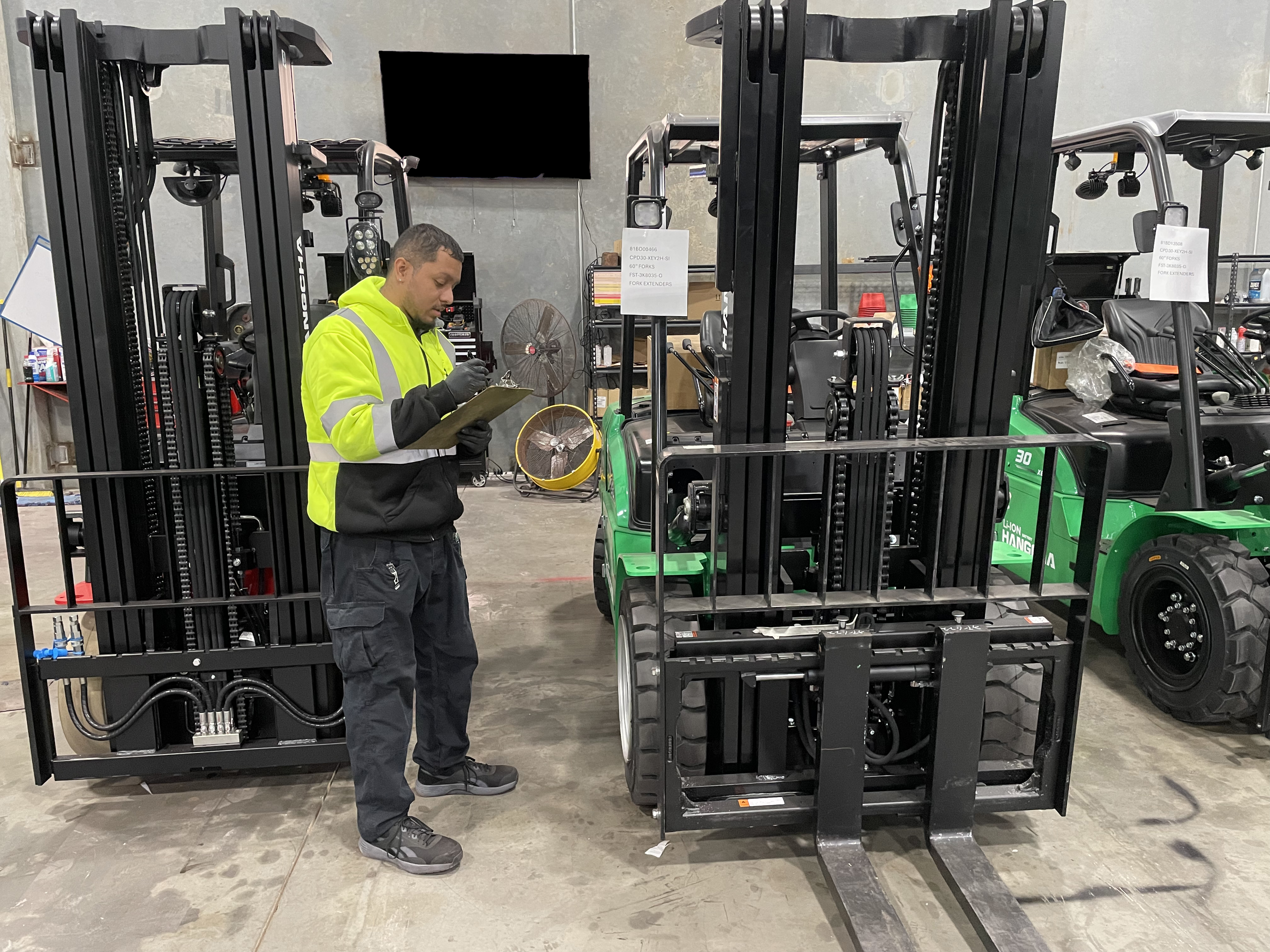
A pre-shift inspection isn’t optional; it is required by OSHA before each shift. It is also critical for safety and optimal performance. Daily checks help you catch wear or damage before it causes downtime. It also ensures operator controls, hydraulics, and power systems are properly functioning. These procedures protect both your workforce and your facility’s operations.
Daily Inspection Checklist Overview
Here are key inspection areas designed for your forklifts, whether it’s a model with a lithium-ion electric or internal-combustion (IC) powertrain. NOTE: Adapt this to your facility and equipment’s specific needs.
1. Pre-Setup
- Park the truck on level ground, engage the parking brake, lower the forks, and turn off the power.
- Ensure the inspection area is clear of hazards or debris.
- Review the prior shift’s log for unresolved issues.
- Ensure you, as the operator, wear the necessary PPE and fill in the inspection log (paper or digital).
2. Walk-Around Visuals
- Inspect the frame/chassis for cracks, dents, or damaged welds.
- Check the overhead guard, load backrest, and mast uprights for deformation or damage.
- Inspect the tires for correct inflation (pneumatic), tread wear, embedded objects, and/or side-wall cuts.
- Look under the forklift for leaks, hydraulic fluid, oil, or coolant.
- Ensure wheel assemblies and forks are secure and properly attached.
3. Forks, Mast & Load Handling
- Inspect Forks: Are the forks straight? Are the heels worn past allowable limits? Are retention pins present and secure?
- Raise and Lower the Mast with no load. While operating, check for smooth operation and that there are no unusual noises or binding.
- Check lift chains and rollers. Are they tensioned correctly, lubricated, and free of visible damage?
- For side-shift or Attachments, verify that they respond smoothly and are free of play or binding.
4. Power System & Fluids
- For Lithium-ion Electric Models: Verify battery charge level, inspect cables/terminals for corrosion or damage, and confirm battery is securely mounted.
- For IC Models: Check the fuel level (diesel, propane, or gas), inspect the fuel system for leaks, and verify oil and coolant levels are within range.
- Check hydraulic and brake fluid levels and examine reservoirs for contamination or leaks.
- Confirm charging connectors (for electrics) or fuel/filling connectors (for IC models) are in good condition.
5. Safety Systems & Operator Controls
- Test horn, backup alarm, and lights (head, tail, indicators).
- Verify the seatbelt or restraint system is functioning and undamaged.
- Confirm operator presence switch (seat switch) and any interlocks operate correctly.
- Ensure the data plate is legible and located correctly.
- Safely test the parking brake (if the facility allows) for proper holding.
6. Operational Test Drive
- With forks lowered and no load, power on the truck, and check the display for error codes or warning lights.
- Drive forward and reverse slowly while checking for smooth steering and no unexpected changes or vibration.
- Operate lift/tilt with no load and listen for unusual noises. Also feel for smooth response.
- If anything is abnormal: Tag the truck “Out of Service”, report the issue immediately, and do not operate until cleared.
NOTE: For additional model-specific inspection points, refer to your daily maintenance checklist in your model’s Hangcha Operation and Maintenance Manual.
Documenting Results & Follow-Up Actions
A daily inspection is only as effective as the documentation that follows it. Each check should be logged consistently. When an issue is identified, it’s important to note the severity and whether it requires immediate attention or continued monitoring.
Over time, these records become valuable data points, revealing trends like recurring hydraulic leaks or uneven tire wear that may point to deeper operational concerns. Keeping complete, organized inspection records not only supports OSHA compliance but also reinforces a culture of accountability and safety.
Beyond the Daily Checks
The most reliable fleets are those maintained with consistency and care. Training operators to recognize warning signs and communicate them effectively prevents minor concerns from turning into costly repairs.
Pairing daily checks with scheduled weekly or monthly maintenance helps extend the life of your equipment even further. Cleanliness is also key. By keeping cabins clear, batteries/engines free of debris, and exterior surfaces clean, you create a more efficient operation and a longer lifespan for your forklifts.
Why Inspection Matters for Hangcha Fleets
Hangcha forklifts are engineered for long-term reliability, but consistent daily inspections are what keep them operating at their best. A well-maintained truck not only reduces the risk of unexpected breakdowns but also enhances overall safety and operator confidence.
At Hangcha, that’s what making material handling easier is all about.